
Engineer's Specification
Specify. Specify. Specify.
A wire marker is one of the smallest parts on any electrical project, yet a poor choice can turn into one of the costliest. A clear, specific specification sets the standard from day one. It names the exact wire marking system to be installed and closes the door on “or equal” substitutes that fade, leach or fail inspection.
Our parent company Sunlec’s 1998 Marking Times newsletter documented what happens when contractors cut corners: rejected control panels, re-wired control rooms and a wastewater lift station shut down for repairs. Decades later, the lesson still holds. Specify Grafoplast® by name, and make your spec airtight.
June 1989 …
The Sunlec office received a phone call from an irate major Electrical Contractor – “Come over and show me this Grafoplast stuff”
The Problem
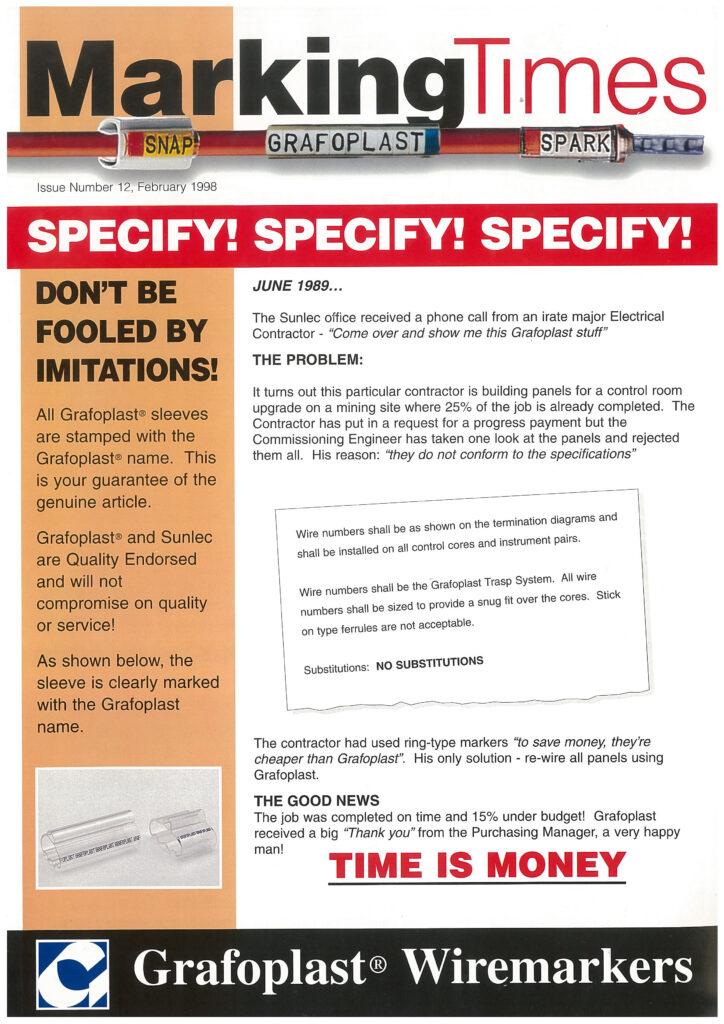
It turns out this particular contractor is building panels for a control room upgrade on a mining site where 25% of the job is already completed. The Contractor has put in a request for a progress payment but the Commissioning Engineer has taken one look at the panels and rejected them all. His reason: “they do not conform to the specifications”
Wire numbers shall be as shown on the termination diagrams and shall be installed on all control cores and instrument pairs.
Wire numbers shall be the Grafoplast Trasp System. All wire numbers shall be sized to provide a snug fit over the cores. Stick on type ferrules are not acceptable.
Substitutions: NO SUBSTITUTIONS
The contractor had used ring-type markers “to save money, they’re cheaper than Grafoplast®”. His only solution – re-wire all panels using Grafoplast®.
The Good News
The job was completed on time and 15% under budget! Grafoplast received a big “Thank you” from the Purchasing Manager, a very happy man!

Don’t Be Fooled by Imitations
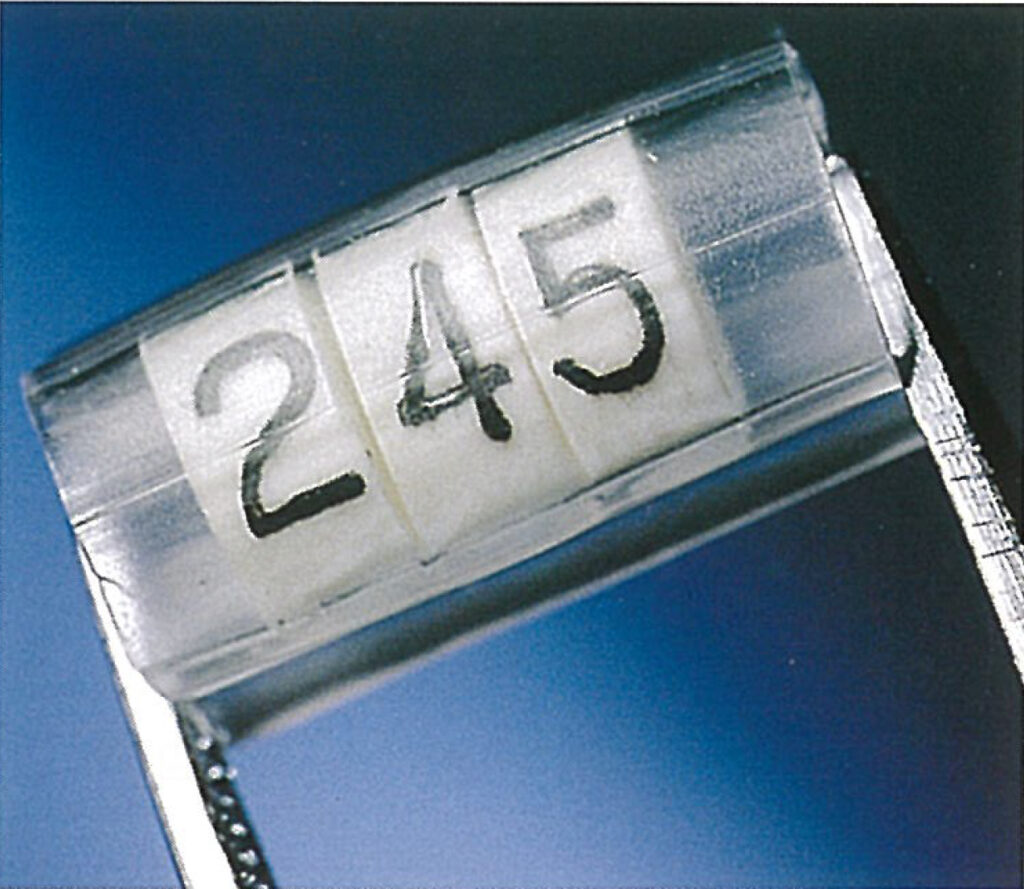
Every genuine Grafoplast® sleeve is stamped with the Grafoplast® name, so you can confirm you’re getting the real thing. As shown in the image, the name is printed clearly along the sleeve, which makes it easy to check during submittal review, on delivery and at inspection.
Grafoplast® Wiremarkers Inc. and our parent company, Sunlec, are committed to quality and service, and we won’t compromise on either.
How to Write a Grafoplast® Specification
Wire Markers, Labels and Tags
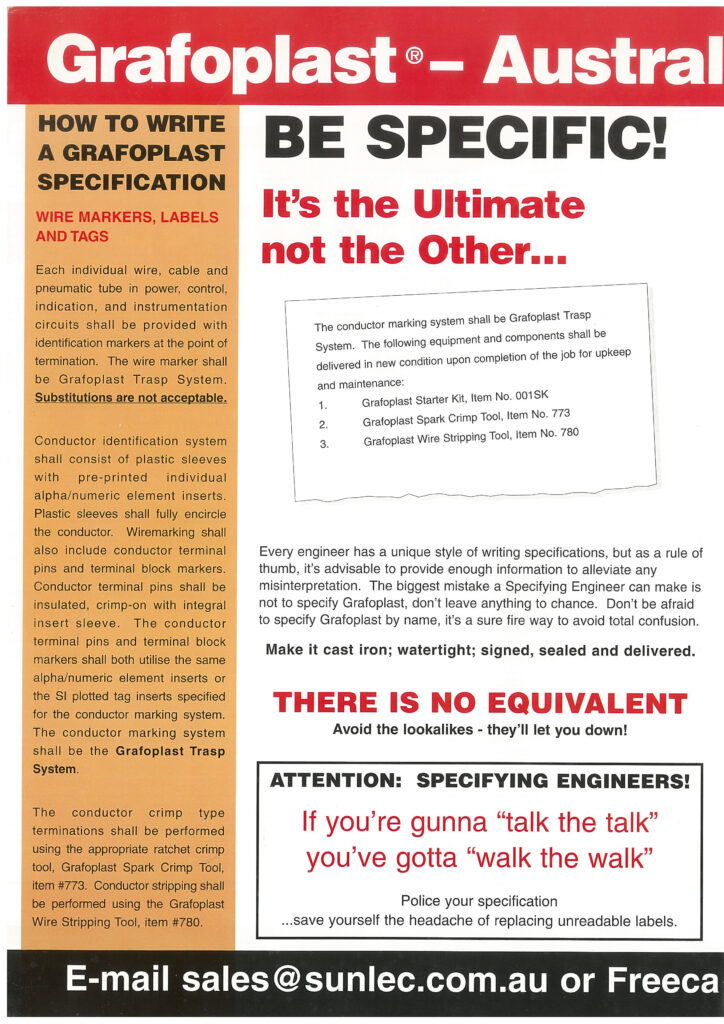
Each individual wire, cable and pneumatic tube in power, control, indication, and instrumentation circuits shall be provided with identification markers at the point of termination. Locate the label within 2″ of the wire, cable or tube termination. The wire marker shall be Grafoplast Trasp System. Substitutions are not acceptable.
Conductor identification system shall consist of plastic sleeves with pre-printed individual alpha/numeric element inserts. Plastic sleeves shall fully encircle the conductor. Wiremarking system shall also include conductor terminal pins and terminal block markers. Conductor terminal pins shall be insulated, crimp-on with integral insert sleeve. The conductor terminal pins and terminal block markers shall both utilize the same alpha/numeric element inserts or the SI plotted tag inserts specified for the conductor marking system.
Be specific: it’s the ultimate not the other
The conductor marking system shall be Grafoplast® TRASP® System. The following equipment and components shall be delivered in new condition upon completion of the job for upkeep and maintenance:
Grafoplast® Starter Kit, Item No. 001SK
Grafoplast® Spark Crimp Tool, Item No. 773
Grafoplast® Wire Stripping Tool, Item No. 780
Every engineer has their own way of writing specifications, but the rule of thumb is the same: include enough detail that there’s no room for interpretation. One of the most common mistakes a specifying engineer can make is leaving the wire marking system open to choice. Don’t leave it to chance.
Specify Grafoplast® by name, along with the marking system and tooling. It’s the simplest way to make sure everyone, from the submittal reviewer to the installer, works to the same standard.
Make it clear, enforceable and airtight.
Substitutions: Not Accepted
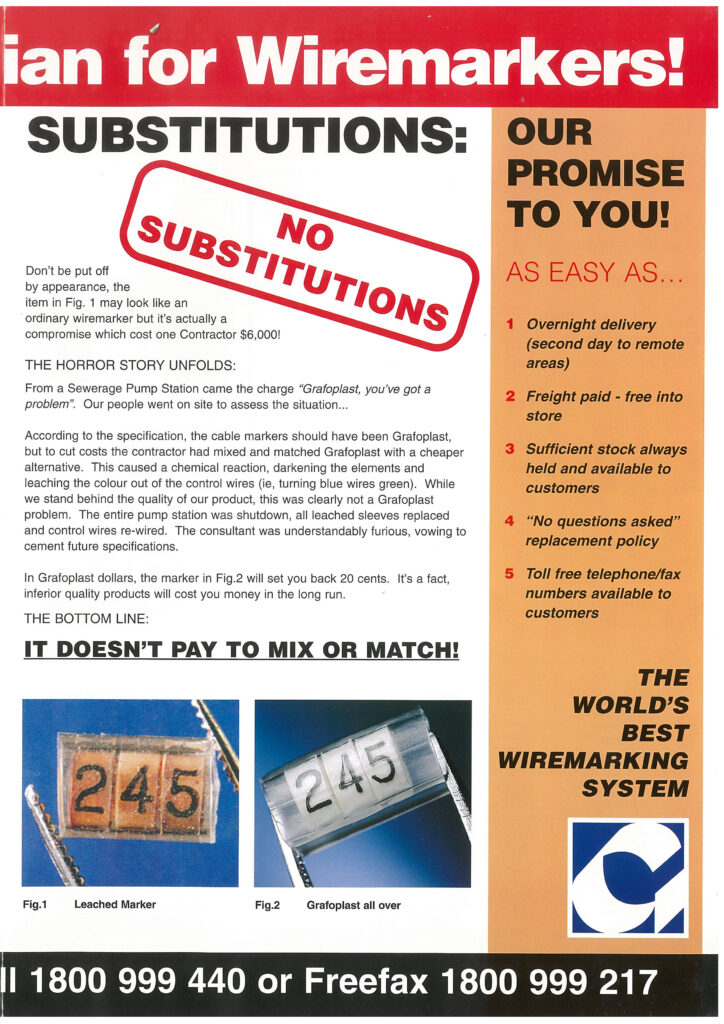
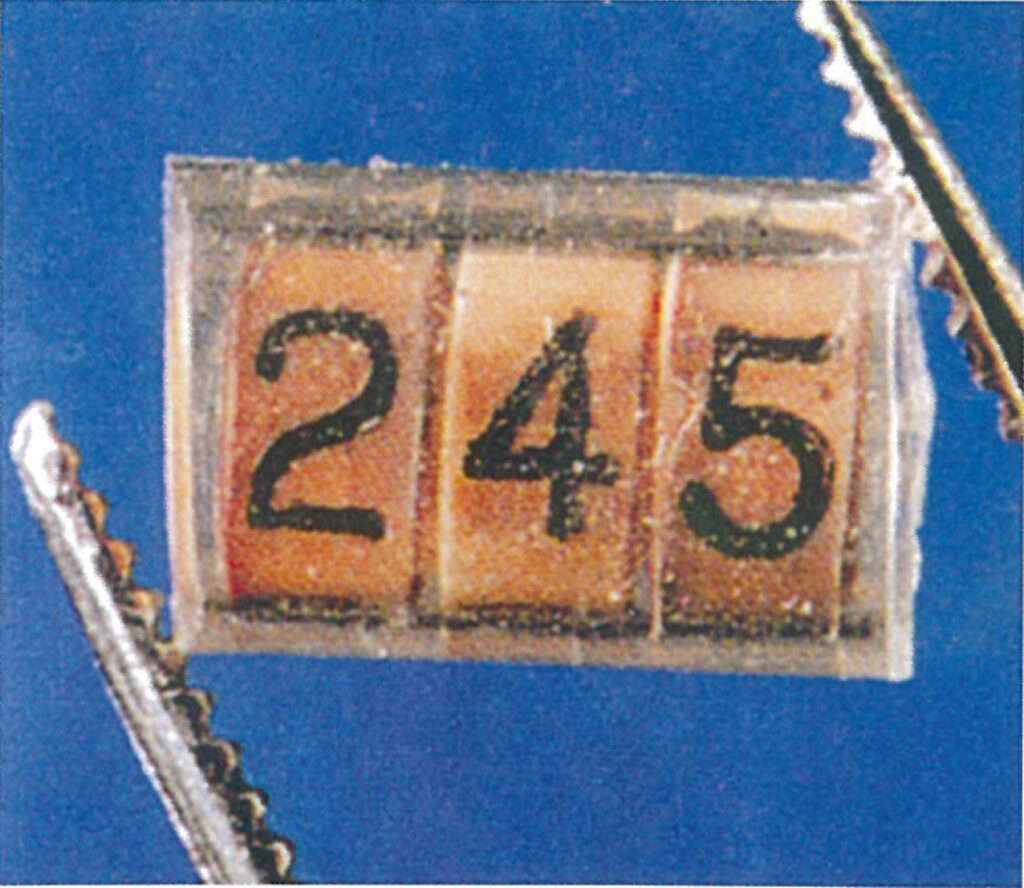
Don’t be fooled by appearances. The marker in Fig. 1 may look like an ordinary wire marker, but it’s actually a compromise that cost one contractor around AU$6,000.
The Story
The call came from a wastewater lift station in Australia: “Grafoplast®, you’ve got a problem.” Our parent company Sunlec’s team went on site to assess the situation.
The specification called for Grafoplast® wire markers, but to cut costs the contractor had mixed Grafoplast® with a cheaper alternative. The combination caused a chemical reaction that darkened the marker inserts and leached the color out of the control wiring, turning blue wires green.
We stand behind the quality of our products, but this wasn’t a Grafoplast® problem. The entire lift station had to be shut down, every affected sleeve replaced and the control wiring redone.
The consulting engineer was understandably furious and vowed to tighten future specifications.
By comparison, the Grafoplast® marker in Fig. 2 cost just 20 cents at the time. Cheaper products rarely save money in the long run.
The bottom line: it doesn’t pay to mix and match.
Frequently Asked Questions
Most commercial and institutional projects cover conductor identification in CSI MasterFormat Section 26 05 53, Identification for Electrical Systems. Specs for industrial control panels and machinery often address it in the panel or equipment section too. Wherever it sits, the wire marker requirements should be specific enough that there’s only one way to meet them.
Not on every conductor. The NEC sets identification requirements for specific conductors, such as grounded and equipment grounding conductors, but it doesn’t require alphanumeric markers throughout. Industrial machinery standards such as NFPA 79 go further and call for conductors to be identified at each termination, consistent with the wiring diagrams. Either way, a project specification can, and usually should, require more than the code minimum. Always check the current edition of the standards that apply to your project.
“Or equal” invites substitution. Markers that look similar on a submittal can perform very differently in the field, and once an alternate is approved it’s hard to push back on site. If legibility and durability matter, name Grafoplast® and state that substitutions will not be accepted.
At a minimum, it should specify:
- the Grafoplast® TRASP System as the conductor marking system
- pre-printed alphanumeric inserts in sleeves that fully encircle the conductor
- the same marking system for terminal pins and terminal block markers
- the Grafoplast® crimp and wire stripping tools for terminations
- a clear statement that substitutions will not be accepted
No. In one case documented by our parent company, Sunlec, in Australia, a contractor mixed Grafoplast® wire markers with a cheaper alternative at a wastewater lift station. The combination caused a chemical reaction that leached the color out of the control wiring. The station had to be shut down and re-wired. Using one system throughout avoids compatibility problems and keeps identification consistent.
It can be expensive. In another Sunlec case, a contractor used cheaper ring-type markers on control panels for a mining project. The commissioning engineer rejected every panel for not meeting the specification, and the contractor had to re-wire them all with Grafoplast®. Reviewing submittals carefully and checking installed products before commissioning helps you catch substitutions early.
The right crimp and stripping tools give you consistent, reliable terminations. Some specifiers also require the tools to be turned over to the owner in new condition at project closeout, so maintenance crews have what they need for future work.
A wire marker costs only cents, but a rejected panel, a re-wire or an unplanned shutdown can cost thousands. Specifying a proven system up front is almost always cheaper than fixing a substitute later.
Yes. The Grafoplast® Wiremarkers Inc. team can help with specification language, product selection and part numbers for your project. Contact us to get started.
Why specifying wire markers matters
For engineers and specifiers, conductor identification is a small line item with a long service life. Long after commissioning, technicians rely on clear, durable wire markers to trace circuits, diagnose faults and carry out maintenance safely. If those markers fade, slip or become illegible, a routine repair can become hours of ringing out conductors by hand.
US construction specifications usually cover this under CSI MasterFormat Section 26 05 53, Identification for Electrical Systems. Industrial machinery standards such as NFPA 79 also call for conductors to be identified at each termination, consistent with the wiring diagrams. A specification that only asks for “wire markers” or allows “or equal” products leaves the choice to price rather than performance.
Lessons from the field
Grafoplast® Wiremarkers Inc. is part of the Sunlec group, which has supplied Grafoplast® wire markers to industry for decades. In 1998, Sunlec’s Marking Times newsletter shared two real-world cases from Australia that show what happens when a specification isn’t enforced.
The rejected panels: A contractor building control panels for a mining site upgrade used cheaper ring-type markers instead of the specified Grafoplast® TRASP® System. With about a quarter of the job complete, the commissioning engineer rejected every panel for failing to meet the specification. The only fix was to re-wire all of them with Grafoplast®.
The lift station shutdown: At a wastewater lift station, a contractor cut costs by mixing Grafoplast® markers with a cheaper alternative. The combination caused a chemical reaction that darkened the markers and leached the color out of the control wiring, turning blue wires green. The entire station had to be shut down, the sleeves replaced and the control wiring redone, at a cost of around AU$6,000 at the time.
In both cases, a few cents saved per marker turned into rework, downtime and an unhappy client.
What to include in your specification
A strong wire marking specification names the manufacturer, the marking system and the installation tools. For example:
- Marking system: Grafoplast® TRASP® System, with pre-printed alphanumeric inserts held in clear sleeves that fully encircle the conductor
- Consistency: terminal pins and terminal block markers use the same marking system, so identification matches from end to end
- Tooling: the specified crimp and wire stripping tools, so terminations are consistent and repeatable
- Substitutions: a clear statement that substitutions will not be accepted
Naming Grafoplast® explicitly removes guesswork during the submittal review and gives you clear grounds to reject non-compliant products on site.
Built for long-term reliability
Grafoplast® wire markers are designed for clear, durable conductor identification in industrial control panels, machinery, process plants and infrastructure projects. Whether you’re writing a Division 26 specification, building panels for OEM equipment or planning a plant upgrade, specifying Grafoplast® by name helps make sure the system you design is the system that gets installed.